Back to »
Struggling to reach your ideal customers?
In this episode I talk to Kirsty Jagielko about how to develop a Go-To Market strategy
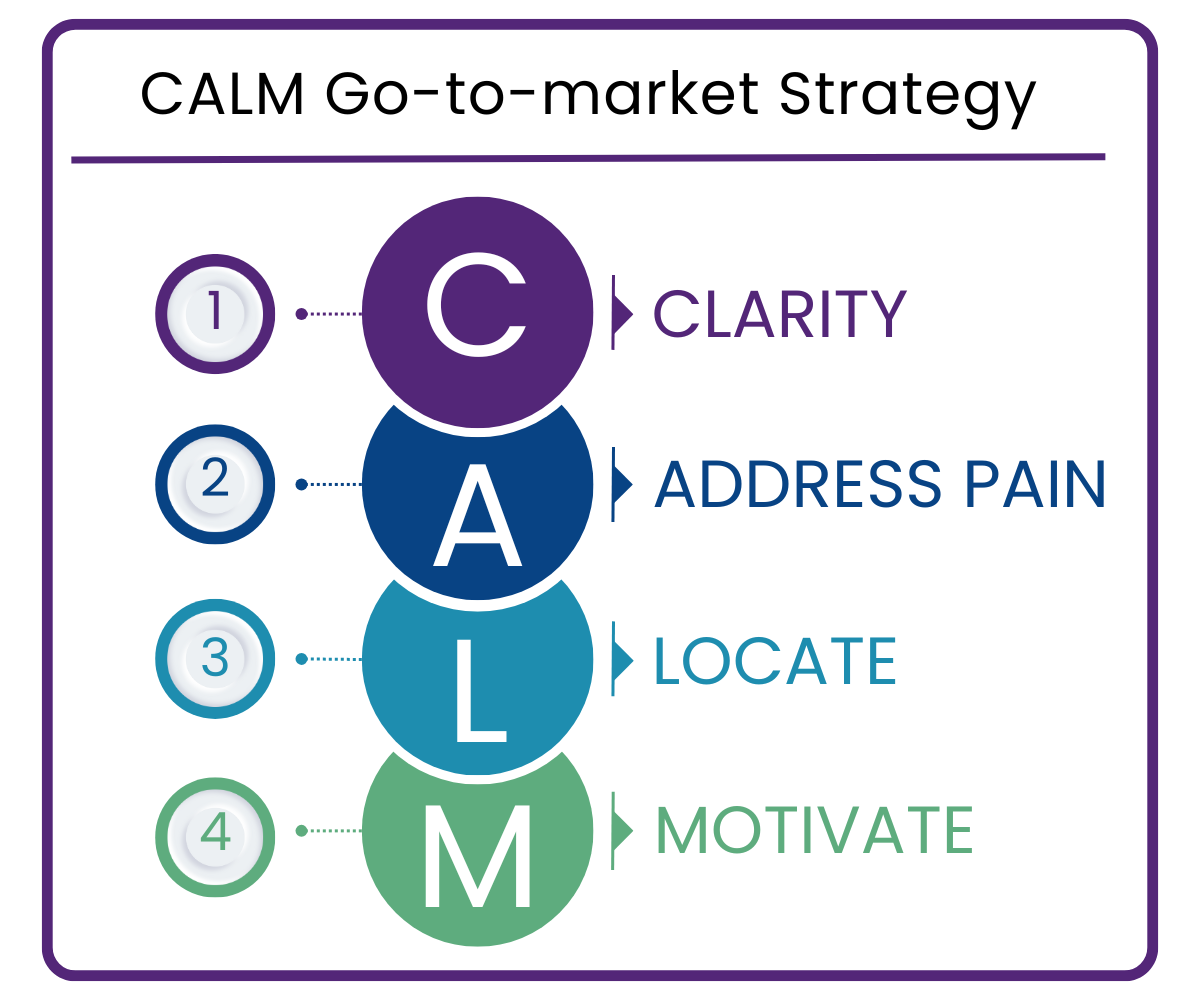
If you're looking for a clear approach to develop your go-to-market strategy, Kirsty walks you through how to gain clarity about your ideal customer, address their pain points, locate your audience, and motivate them to act.
Watch the episode
Video editing by Squinty Pixels. Slightly dodgy lighting & sound, TheIBG.
Get personalised insight and advice from Kirsty by taking our quick quiz.

Show notes
Shona: Today I’m joined by Kirsty Jagielko from Thrive Path. We’re going to talk about go-to-market planning and Kirsty is going to take us through the key steps. Kirsty, do you want to introduce yourself?
Kirsty: Thanks for having me Shona. I work mainly with B2B scale-ups, whether that’s startups who are growing or SMEs that have hit a sales plateau and are looking to take their next growth step. I’ve led end-to-end revenue functions across marketing, sales, and customer success, working closely with businesses to sharpen their narrative, align commercial teams, and drive sustainable growth.
Kirsty: Typically a business that’s facing growth challenges will have salespeople working hard, but the issue is usually a lack of clear positioning. They don’t have a defined ideal customer profile and their messaging isn’t consistent across teams. Marketing is the foundation that can make sales scalable and repeatable. My role is to help businesses get clarity on their go-to-market strategy.
Shona: That’s a really good way of putting it. Today our go-to-market planning follows the CALM model. We’re going to cover customer clarity, addressing pain points, locating your audience, and motivating them to act.
Section 1: Customer clarity – knowing exactly who you are selling to
How do you get clarity on who your ideal customer is and how you are going to solve their problems?
Kirsty: Who exactly are we selling to? That is the question. A lot of businesses, both B2B and B2C, start by saying anyone and everyone. Over time they might get a little more specific, but they’re still trying to be too much to too many people. With founder-led and owner-led businesses, there can also be a narrowing of vision because the founder has started from a point of personal pain, which can limit their understanding of the broader customer base.
Kirsty: The clarity you need looks something like: we help B2B SaaS companies with 10 to 50 employees who are struggling to transition from founder-led sales to a repeatable go-to-market engine. That is one of my ICPs. You are clear on the company size, the sector, and the pain point. If you ask your whole team to describe the ideal customer in one sentence and you get different answers, you have a real problem. And when you say it to a prospect, they should immediately think: that’s for me. Without that clarity, your positioning becomes vague, marketing struggles, and sales chases one type of customer while marketing creates content for another.
Shona: So what is a practical way for a business to go through that process and identify their ideal customer?
Kirsty: If you are already in the market and making sales, start by looking at where the sale is easier and where you keep seeing the same patterns. Business owners who have been leading their own sales can start to recognise repeatable ways of winning. I often advise founders to go and talk to 10 or 15 existing customers with a set of open questions around the pain point. When you start to hear the same themes come up, you are onto something. You do not need to speak to a hundred people. You will get clarity quickly through those conversations, and that feeds directly into the next step, which is understanding their pain points.
Section 2: Address pain points – understanding what your customer needs to solve
Once you have a clear view of your ideal customer, how do you identify their pain points and make sure your messaging addresses them?
Kirsty: Most businesses talk about who they are, what they do, what they have built, and why it’s what you need. But that is not from the customer’s point of view. You need to be really clear on who you are selling to, what their biggest pain is, and why they should switch to you now. That research is critical.
Kirsty: There are different frameworks you can use. Basic persona building: identifying types of customers, building out example profiles. Or a jobs-to-be-done approach, understanding what your customer does day to day and how you can help. Both work, as long as you are talking to real customers. You need to uncover the pain points that drive people to consider a new solution or change provider. Without that, you can run campaigns that generate lots of leads, and then your sales team tells you the leads are no good. You have not met the actual customer need.
Kirsty: Think about your website. If someone lands on it and it is not immediately clear that you address their needs, they will leave. Talking about yourself and your solution is not the answer. Strong marketing leads with who the customer is, where they are, and what they are dealing with.
Shona: If you have multiple pain points, how do you decide which ones to focus on?
Kirsty: Most solutions address two or three key pain points, and that is where you tie your product features back to what matters. I would not try to talk about more than two or three, otherwise the message gets confused. Recording your sales conversations is a really useful way to quickly identify which pain points come up most and which messages are resonating.
Section 3: Locate your audience – finding where your customers are
You have done the work on your ideal customer and their pain points. Now where do you find them and how do you get in front of them?
Kirsty: Think about where they hang out and where they get their information. All of that important work on pain points and messaging will have no impact if nobody sees it. Your customers are not going to come and find you. You have to be in front of them. In B2B especially, that can be confusing. People tend not to react publicly to posts from business accounts because they know they will get sales outreach. But if they find your content interesting, they will share it in DMs or WhatsApp groups. That is what is called dark social.
Kirsty: Ask your customers where they get their information and how they make decisions. Do they use professional groups? Do they take advice from peers? That tells you where to be. Is it LinkedIn? Are they on Quora or Reddit? Reddit forums in particular let you see exactly what people are talking about. From there you can think about your primary acquisition channels and your organic versus paid strategies. LinkedIn is important right now, but outbound email still has a role, especially for enterprise sales. For B2B, events are also a key channel. The key is not to try and do everything at once. Pick one or two channels to master first. Spreading yourself too thin kills your momentum.
Shona: I remember doing my first event and thinking nobody bought anything. You expect to turn up and it all works, but it doesn’t.
Kirsty: That’s the awareness piece. In B2B, only about 5% of your potential customers are actively in market at any given time, ready to make a purchasing decision. And even when they get close to that point, they have already done a lot of research and spoken to a lot of people. So 95% of your marketing effort is building trust and awareness with people who are not yet ready to buy. They are not moving through a funnel in a straight line. They jump around. The hardest part, especially when you are starting out, is not to confuse execution with strategy. Posting on LinkedIn without thinking about why you are doing it, or joining webinars because someone else said it worked, is what I call committing random acts of marketing. You want to build something repeatable that reaches customers and tells the story of how you will do the best job for them. And make sure you have the right tracking in place so that when something does convert, even 18 months later, you can trace it back to the activity that started it.
Section 4: Motivate – converting interest into action
You have found your audience and built awareness. What do you need to do to convert that interest into a sale?
Kirsty: You need to create urgency. If you do not, people will stay in consideration mode. What is going to compel them to act right now? For that 5% who are ready to buy, you need a compelling reason to come to you specifically. Not just a generic call to action like sign up for our software. Something more specific, such as joining a founding customer programme with a meaningful benefit. That works well for earlier-stage businesses taking a new product to market.
Kirsty: In a competitive environment, you also need to be clear on your points of differentiation. B2B buyers are as emotional as B2C buyers, probably more so, because when you make a purchase recommendation in a business, your job is potentially on the line. Trust is critical. You need to build proof points: case studies showing how you have done it for others, ROI calculators, comparison guides. Give people the comfort that they are making the right decision by choosing you.
Kirsty: A lot of go-to-market plans read more like a to-do list than a strategy. We are running ads, sending emails, we have webinars booked, and we are hoping something works. It needs to be outcome-focused. What are we going to achieve in the next 30 days, the next 90 days? What are the metrics that tell us it is working? And the hardest question for most marketing teams is: what do we stop doing? Marketing can be fun. Creative people like to make content. But if it is not tied back to revenue outcomes, you have to ask whether it is the right activity.
Getting in touch
Shona: Thanks very much Kirsty. We have covered how to develop a go-to-market plan across four areas. If anyone wants to get in touch with Kirsty, you can find her on LinkedIn.
Kirsty: Thank you for having me.
Links

Do you have a question for our experts?
Submit your question here and if it fits with our current and planned content, we’ll find a supplier to answer your question via either our podcast or our blog.

Interested in being featured in our podcast or blogs?
We ask some of our expert suppliers, who we have carefully vetted, to provide expert advice via our podcast and blog. If you would like to find out more about this we are inviting potential contributors to register your interest.