Back to »
CALM Business Planning
In this episode I talk to Stephen O’Donnell from Action Coach Glasgow East about CALM business planning.
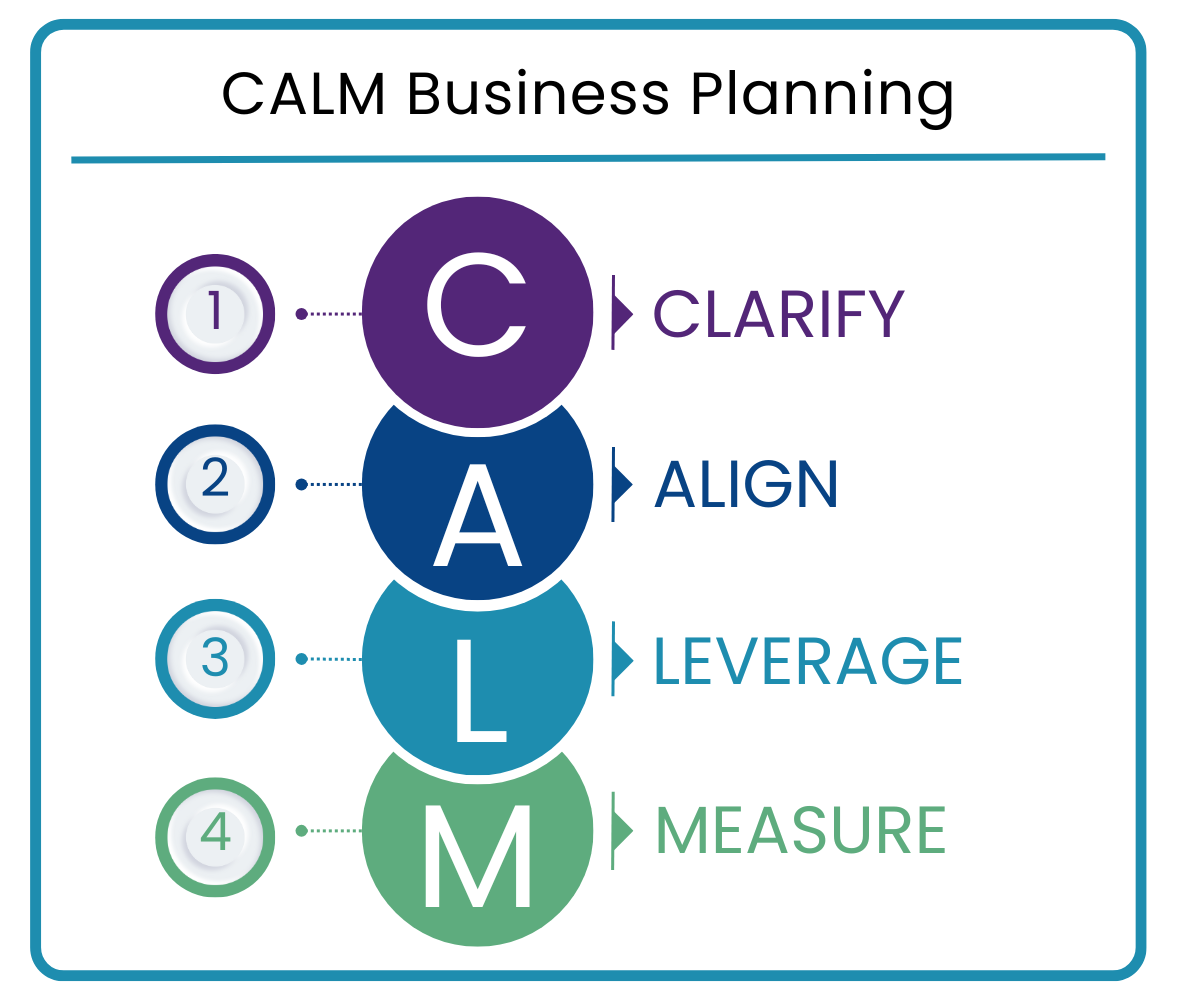
Stephen shares his expertise on creating a strategic business plan that actually gets executed. Learn how to clarify your goals, align your team, leverage your resources effectively, and measure progress to ensure your plans become a reality.
Watch the episode
Video editing by Squinty Pixels. Slightly dodgy lighting & sound, TheIBG.
Get personalised insight and advice from Stephen by taking our quick quiz.

Show notes
Section 1: Clarify your business goals
How should business owners find the clarity they need in terms of what they want to achieve, whether that’s next quarter or the next year?
Stephen: What I’ll do is walk through what we mean by clarity, the potential cost of not being clear on the business’s goals, the benefits, and some quick actions that people can take away today.
Shona: That sounds ideal.
Stephen: The risk then would be: what is the cost of not being clear on the business’s goals and priorities? One of the things I see a lot is that businesses tend to make reactive decisions. Without clarity, you’re responding to whatever comes through the door rather than driving towards a defined goal.
Shona: So the clarity piece is really the foundation. Without it, everything else becomes harder.
Stephen: Exactly. And the benefits of having that clarity are significant. Your team knows what direction you’re heading. Your decisions become more consistent. And you can start to measure whether you’re moving in the right direction.
Section 2: Align your team behind the plan
Getting your team collectively aligned with the vision and goals for the business is the next step. What are the benefits, and what’s the cost of not doing it?
Stephen: The biggest cost of not having the team aligned is a misalignment in expectations. You, as the business owner, might have expectations of a certain person’s roles and responsibilities depending on their position in the business. But if they don’t understand what the three key priorities are, they’re working to their own interpretation.
Shona: I’ve actually been in a meeting with a managing director and his direct reports, and when I asked what the vision was, nobody could tell me.
Stephen: That’s exactly it. And a couple of practical tips: the first step is simply to ask the team whether they are clear on what the three key priorities are for the business right now. If they can’t tell you, you have a misalignment problem, and that’s costing you every single day.
Section 3: Leverage your resources
Is the owner becoming the bottleneck something you see often in businesses, and how does leverage help solve that?
Stephen: I would define leverage as more with less. How do we get more out of the people, more out of our systems, and more out of the technology we use? If we’re not leveraging our people and systems, progress is slow and work becomes repetitive. As a business owner, you become dependent on being in the room to make decisions and drive things forward. You become the bottleneck.
Shona: Is that something you see quite often, where it slows down other people in the business from being able to deliver?
Stephen: One hundred percent. It’s one of the biggest challenges I see in businesses, particularly when teams are growing. People turn up and they’re not sure what they’re supposed to be doing or how their role aligns to the greater vision. That’s a management, leadership, and delegation issue. Getting the right support through that transition makes a real difference.
Section 4: Measure your progress
How can a business put in place systems or tools to actually measure progress towards the end goal?
Stephen: The phrase is: you can’t manage what you don’t measure. If you’re not measuring key performance indicators or results within the business, it leads to late discovery of issues. You don’t realise there’s a cash flow problem until you look at the bank account. By then, your options are more limited.
Shona: So it’s about having visibility in real time, not looking back after the fact.
Stephen: Exactly. The right measures give you the ability to course-correct early. Whether that’s financial results, team performance, or sales pipeline, having regular checkpoints built into your plan keeps you on track.
Getting in touch
You offer planning sessions and workshops for businesses who want extra support. What does that look like, and what’s the best way for people to get in touch?
Stephen: Website or LinkedIn, contact numbers and details are on both. We run regular planning sessions which we turn into workshops. Business owners and key people on their team can come along and plan and strategise the next 90 days together.
Shona: Thanks very much Stephen for joining us. For everyone who has joined and registered, we’re going to edit this and generate a quiz from the discussion. It’s a self-assessment tool that will give you further guidance from Stephen.
Links

Do you have a question for our experts?
Submit your question here and if it fits with our current and planned content, we’ll find a supplier to answer your question via either our podcast or our blog.

Interested in being featured in our podcast or blogs?
We ask some of our expert suppliers, who we have carefully vetted, to provide expert advice via our podcast and our blog. If you would like to find out more about this we are inviting potential contributors to register your interest.